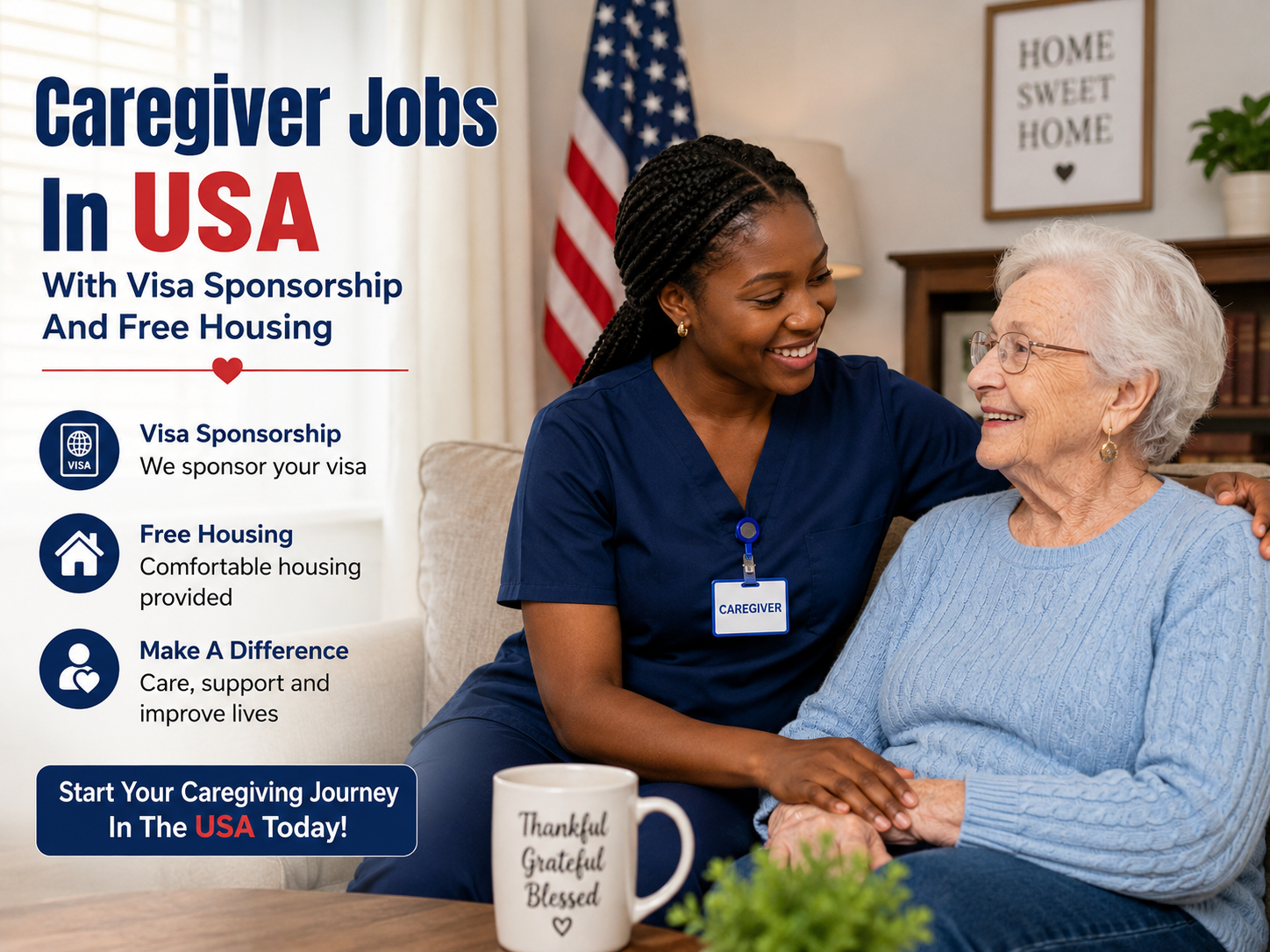
The United States is aging faster than at any point in its history. According to the U.S. Census Bureau, by 2030, all Baby Boomers will be over the age of 65, meaning that roughly 1 in every 5 Americans will be of retirement age. This demographic shift has created an overwhelming demand for caregivers, personal care aides, home health aides, and nursing assistants and there simply are not enough Americans to fill these roles.
The Bureau of Labor Statistics projects that the demand for home health and personal care aides will grow by 22% between 2022 and 2032, which is far faster than the average for all other occupations. This translates to approximately 924,000 new job openings every single year in the caregiving field alone. The shortage is so severe that thousands of U.S. employers including home health agencies, assisted living facilities, nursing homes, and private households are now turning to international recruitment to fill these critical positions.
What makes this opportunity even more exciting for international applicants is that employers are not just offering jobs they are offering complete relocation packages that include visa sponsorship, free housing, free meals in some cases, health insurance, and competitive hourly wages ranging from $15 to $30 per hour depending on the state and level of care required. For someone coming from Nigeria, this is a life-changing opportunity that must be taken seriously and pursued strategically.
What Is A Caregiver Job And What Does The Role Involve?
Before diving into the application process, it is important to clearly understand what a caregiver job in the USA actually entails. Caregiving in the United States is a professional, respected occupation that carries real responsibilities. It is not simply “looking after” someone it is a structured, often medically-adjacent role that requires patience, empathy, physical stamina, and in some cases, certified training.
A caregiver in the USA may work in several settings, including private homes, assisted living facilities, adult daycare centers, memory care units, hospice care facilities, or rehabilitation centers. The duties typically include assisting clients with activities of daily living (ADLs) such as bathing, grooming, dressing, toileting, and mobility. They also involve meal preparation, light housekeeping, medication reminders, transportation to medical appointments, and providing companionship and emotional support to elderly or disabled individuals.
Some higher-level caregiving roles — particularly Certified Nursing Assistants (CNAs) and Home Health Aides (HHAs) — may also involve monitoring vital signs, wound dressing changes, catheter care, and communicating with registered nurses about the patient’s condition. The good news is that many employers who sponsor international workers are willing to provide on-the-job training or pay for your certification courses upon arrival, especially if you already have relevant experience back home.
Types Of Caregiver Jobs Available In The USA For Foreigners
Understanding the specific job titles and what they involve will help you apply to the right positions and negotiate better compensation. Here are the main caregiver roles being offered with visa sponsorship in 2025:
1. Home Health Aide (HHA)
Home health aides provide hands-on personal care to clients in their own homes. This is one of the most commonly sponsored positions because the need is enormous and the work is done in private settings. Pay ranges from $15 to $22 per hour, and live-in HHA positions often come with free room and board in the client’s home.
2. Certified Nursing Assistant (CNA)
CNAs work primarily in nursing homes, hospitals, and assisted living facilities. They perform more clinical tasks than regular caregivers and typically earn between $18 and $28 per hour. CNA certification is required, but many sponsoring employers will help you obtain it upon arrival.
3. Personal Care Aide (PCA)
PCAs assist individuals with disabilities or elderly clients with daily activities. This is an entry-level role that does not require clinical training, making it ideal for first-time applicants. Pay ranges from $14 to $20 per hour.
4. Live-In Caregiver
This is arguably the most attractive option for international applicants because it comes with free housing included as part of your compensation. Live-in caregivers reside in the client’s home, providing 24-hour availability (with mandated rest hours). The arrangement eliminates your biggest expense — accommodation — while you earn and save aggressively.
5. Companion Caregiver
Companion caregivers focus more on non-medical support — conversation, social engagement, errands, driving clients to appointments, and helping them stay mentally active. This is a great entry-level option for those without a healthcare background.
Visa Sponsorship Options For Caregiver Jobs In The USA
Many Nigerians and other international applicants are confused about how visa sponsorship works for caregiver positions. Let’s break it down clearly. There are several legal pathways that U.S. employers use to hire foreign caregivers, and each has its own requirements and timelines.
H-2B Visa (Temporary Non-Agricultural Workers)
The H-2B visa is commonly used by home care agencies and care facilities to hire foreign workers for seasonal or temporary caregiver positions. The employer must first obtain labor certification from the U.S. Department of Labor, proving that no qualified American worker is available to fill the role. This visa allows you to work in the USA for up to 3 years and can be extended. Learn more about the H-2B visa on the official USCIS H-2B page.
EB-3 Green Card (Employment-Based Immigration)
The EB-3 immigrant visa is one of the most powerful options available to caregivers because it leads directly to permanent residency (Green Card) in the USA. Many home health agencies and nursing homes sponsor caregivers for EB-3 Green Cards, especially for CNAs and HHAs in high-demand states. The process takes longer — typically 12 to 36 months — but the result is permanent legal status and the ability to eventually bring your family. You can learn more at the USCIS EB-3 information page.
J-1 Exchange Visitor Visa
Some caregivers come to the USA on a J-1 Exchange Visitor Visa through cultural exchange programs. This is more common for au pairs and companion caregivers. While it does not lead directly to permanent residency, it is a legitimate pathway that allows you to gain U.S. work experience.
TN Visa (For Canadian and Mexican Citizens)
If you hold Canadian or Mexican citizenship, the TN visa under the USMCA agreement allows licensed practical nurses and certain health workers to work in the USA relatively quickly. However, this visa category is limited to citizens of those two countries.
Which U.S. States Are Hiring The Most Caregivers With Visa Sponsorship?
Not all states are created equal when it comes to caregiver demand and sponsorship opportunities. Here are the states where you are most likely to find employers actively sponsoring international caregiver workers in 2025:
- California — The highest-paying state for caregivers, with a minimum wage of $16/hour and caregiver wages often hitting $20–$28/hour in cities like Los Angeles and San Francisco. California has thousands of sponsored positions available through its vast network of home care agencies.
- New York — New York’s Consumer Directed Personal Assistance Program (CDPAP) and its Managed Long-Term Care system create enormous demand for caregivers, particularly in New York City. Many agencies here sponsor workers from the Caribbean, Africa, and the Philippines.
- Texas — A rapidly growing elderly population and a lower cost of living make Texas one of the best states for international caregivers. Live-in positions with free housing are especially common in suburban Texas cities.
- Florida — Florida has the largest concentration of retirees in the USA, creating a seemingly endless demand for caregivers. Agencies in cities like Miami, Orlando, and Tampa regularly sponsor international workers.
- Illinois, Pennsylvania, and New Jersey — These states all have large care facility networks and consistently high demand for CNAs and HHAs, many of which come with sponsorship packages.
What Free Housing For Caregiver Jobs Actually Looks Like
When employers advertise “free housing” as part of a caregiver job offer, it typically takes one of two forms. The first and most common is the live-in arrangement, where you move into the client’s home and are provided a private bedroom (and sometimes a private bathroom), meals, utilities, and internet access — all at no cost to you. In exchange, you provide care to the client during specified hours, with mandated off-duty periods (usually 8 hours of sleep time and one full day off per week under most state laws).
The second form of free housing is employer-provided accommodation, where a home care agency or nursing facility arranges shared housing for its recruited international staff — often in a nearby apartment complex, with rent either fully covered or heavily subsidized and deducted from your pay at a nominal rate. This is common in states like California, Florida, and New York, where housing costs are high and employers want to make their sponsorship packages more attractive.
Either way, free or subsidized housing dramatically increases your ability to save money. A caregiver earning $18/hour in Texas, working 40 hours a week, takes home roughly $2,880 per month before taxes. With no rent expense, you could realistically save $1,500 to $2,000 per month — which in naira terms represents a life-transforming income.
Salary And Benefits You Can Expect
Beyond free housing, the financial package for sponsored caregiver jobs in the USA is genuinely competitive. Here is a realistic breakdown of what you can expect:
| Benefit | Details |
|---|---|
| Hourly Wage | $14 – $30/hour depending on role and state |
| Weekly Hours | Full-time (40 hrs), Part-time, or Live-in |
| Health Insurance | Most sponsors provide medical, dental, and vision |
| Free Housing | Provided for live-in and many agency-sponsored roles |
| Paid Time Off | Typically 5–10 days after probationary period |
| Overtime Pay | 1.5x rate for hours beyond 40/week (federal law) |
| Meal Allowance | Common in live-in and facility-based roles |
| Flight Ticket | Many sponsors cover relocation flights |
| Certification Support | Employers often pay for CNA/HHA training |
How To Find Legitimate Caregiver Jobs In The USA With Visa Sponsorship
With so many opportunities available, finding legitimate listings is both an art and a science. Here are the most reliable platforms and strategies for finding real, verified caregiver jobs with visa sponsorship from Nigeria or anywhere in Africa:
1. Indeed.com — Search “caregiver visa sponsorship” and filter by country or remote to find employers explicitly offering international recruitment. Indeed is one of the most trusted job boards in the USA, and many sponsored roles are listed there. Visit Indeed Caregiver Jobs to start your search.
2. ZipRecruiter — Another major U.S. job board where home health agencies regularly post sponsored caregiver positions. You can set up email alerts for new listings.
3. Care.com — One of the largest platforms specifically for caregivers, babysitters, and home aides. Private families and agencies both post on this platform, and some are open to sponsoring qualified international candidates. Visit Care.com to create your profile.
4. CGFNS International — If you are a trained nurse or healthcare worker, the CGFNS (Commission on Graduates of Foreign Nursing Schools) provides credential evaluation services that many U.S. employers require as part of their sponsorship process. Getting your credentials evaluated by CGFNS significantly increases your chances of being sponsored.
5. USA Jobs (usajobs.gov) — Federal healthcare facilities, Veterans Affairs (VA) hospitals, and government-run nursing homes sometimes post caregiver and nursing aide positions with sponsorship. Check USAJobs.gov regularly.
Qualifications And Requirements For International Caregivers
The exact requirements vary by employer and visa type, but here is what most U.S. employers sponsoring international caregivers will look for:
- Minimum of a secondary school certificate (WAEC/NECO) or equivalent
- Relevant experience in caregiving, nursing, or healthcare (even informal family caregiving can count if well-documented)
- Good spoken and written English (this is a major advantage for Nigerian applicants)
- Clean criminal background check — both from Nigeria and once in the USA
- Medical clearance — proof of good health, vaccinations, and TB test results
- Reference letters from previous employers or supervisors
- Valid international passport with at least 18 months of remaining validity
- Basic computer literacy for documenting care notes (most agencies use apps)
- CPR/First Aid certification — highly advantageous and obtainable in Nigeria before departure
How To Avoid Caregiver Job Scams Targeting Nigerians
It is an unfortunate reality that the high demand for these jobs has attracted fraudsters who prey on eager applicants, particularly in Nigeria. Here is how to protect yourself:
Never pay any recruiter, agent, or “visa consultant” money upfront to secure a caregiver job in the USA. Legitimate employers and agencies cover all visa and recruitment costs themselves — they do not charge the applicant. If anyone is asking you to pay for a “processing fee,” “visa application deposit,” or “training registration fee” before you even have a contract, walk away immediately.
Always verify that the company offering the sponsorship is a registered U.S. business. You can check the legitimacy of any U.S. company through the Better Business Bureau (BBB) at bbb.org or verify their state registration through the respective state’s Secretary of State website. Insist on a written contract before making any commitments, and make sure the contract clearly states your visa type, salary, housing arrangements, work hours, and benefits.
Step-By-Step Application Process
Here is a practical, step-by-step roadmap for applying to caregiver jobs in the USA with visa sponsorship from Nigeria:
Step 1: Prepare Your Documents — Gather your international passport, educational certificates, work experience letters, and at least two professional references. Get your documents notarized where required.
Step 2: Get CPR/First Aid Certified — Take a recognized CPR/First Aid course in Nigeria. This immediately makes your profile more competitive.
Step 3: Create Professional Profiles — Sign up on Indeed, ZipRecruiter, LinkedIn, and Care.com. Use a professional photo and write a compelling summary that highlights your caregiving experience and your English fluency.
Step 4: Apply Actively and Track Your Applications — Apply to at least 20–30 positions per week. Keep a spreadsheet of where you applied, the date, and the response.
Step 5: Prepare For Video Interviews — Most U.S. employers will conduct initial interviews via Zoom or Google Meet. Have a quiet, well-lit space ready, dress professionally, and practice answering common caregiver interview questions.
Step 6: Negotiate Your Contract — Once you receive an offer, carefully review the contract. Confirm the visa type, housing arrangements, salary, and start date. If anything is unclear, ask questions before signing.
Step 7: Begin The Visa Process — Your employer will file the appropriate petition with USCIS. Once approved, you will be scheduled for a visa interview at the U.S. Embassy in Abuja or Lagos.
Step 8: Prepare For Your Embassy Interview — Gather all required documents, including your employment contract, visa approval notice (I-797), and proof of intent to return to Nigeria (if on a non-immigrant visa). Be honest and confident during your interview.
Conclusion
Caregiver jobs in the USA with visa sponsorship and free housing represent one of the most legitimate, accessible, and financially rewarding pathways to working and living in America for Nigerians in 2025. The demand is real. The sponsorship is real. The salaries are real. And with the right preparation, the opportunity is very much within your reach.
The key is to approach this opportunity professionally — invest in your documentation, build a strong application profile, apply widely, avoid scammers, and be patient with the process. Thousands of Nigerians are already working as caregivers in the USA today, building savings, sending remittances home, and building new lives. There is absolutely no reason you cannot join them.
Start your research today, take the steps outlined in this guide, and give yourself the best possible chance at this incredible opportunity.
Disclaimer: This article is for informational purposes only. Immigration laws and job market conditions can change. Always consult a licensed U.S. immigration attorney or a verified recruitment agency before making decisions about working abroad.