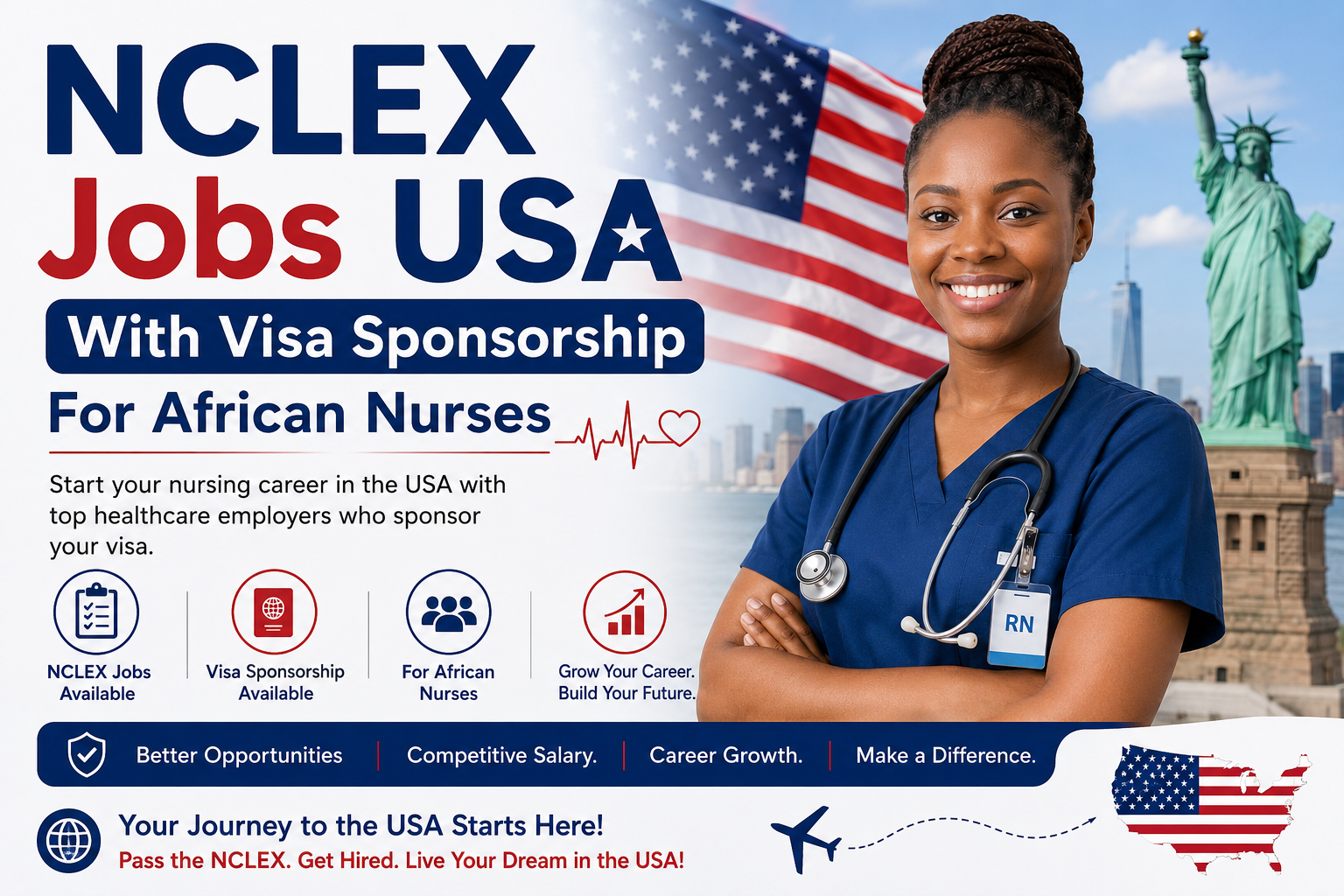
Are you a registered nurse in Nigeria, Ghana, Kenya, or anywhere in Africa dreaming of working in the United States? The good news is that the demand for internationally educated nurses in the USA has never been higher and hundreds of U.S. hospitals and healthcare systems are actively offering visa sponsorship to qualified African nurses who pass the NCLEX-RN exam. This comprehensive guide breaks down everything you need to know: how to find NCLEX jobs in the USA with visa sponsorship, what the process looks like, how much you can earn, and which employers are currently hiring African nurses right now.
What Is the NCLEX and Why Does It Matter for African Nurses?
The NCLEX-RN (National Council Licensure Examination for Registered Nurses) is the standardized licensing exam that every nurse must pass before legally practicing as a registered nurse in the United States. Whether you trained in Nigeria, Kenya, Ghana, South Africa, Zimbabwe, or any other African country, the NCLEX is your golden gateway into the American healthcare system. Without passing this exam, no U.S. hospital — regardless of how desperate the nursing shortage is — can legally employ you as a registered nurse.
The NCLEX-RN tests your clinical judgment and decision-making abilities across several domains including safe and effective care environment, health promotion and maintenance, psychosocial integrity, and physiological integrity. The exam is administered by the National Council of State Boards of Nursing (NCSBN), and you can register to take it internationally — including at Pearson VUE testing centers in Nigeria (Lagos and Abuja) and other African countries. This means you can pass your NCLEX before even leaving your home country, which puts you in an incredibly strong position when applying for U.S. nursing jobs with visa sponsorship.
For African nurses specifically — particularly Nigerians, who make up one of the largest groups of internationally educated nurses in the USA — passing the NCLEX opens doors to earning 3 to 10 times more than what most African nursing salaries offer. The median annual salary for a registered nurse in the United States is currently over $81,000 per year, with experienced nurses and those in high-demand specialties earning well above $100,000 annually.
The U.S. Nursing Shortage: Why American Hospitals Need African Nurses NOW
The United States is experiencing one of the most severe nursing shortages in its history. According to the American Association of Colleges of Nursing (AACN), the U.S. is projected to face a shortage of over 1 million registered nurses by 2030. This shortage is driven by an aging baby boomer population requiring more healthcare, mass retirements of experienced nurses, pandemic-related burnout, and insufficient domestic nursing graduates to fill the gap.
This crisis is your opportunity. American hospitals — from large academic medical centers in New York and California to regional hospitals in Texas, Florida, and the Midwest — are aggressively recruiting internationally trained nurses. African nurses, especially those from Nigeria, are highly sought after for several reasons: they are educated in English-medium programs, they tend to have strong clinical skills, and they demonstrate high NCLEX pass rates when properly prepared. Many Nigerian nurses who have relocated to the U.S. report smooth integration into hospital systems, particularly those that have strong international nurse mentorship programs.
Hospitals are so desperate for nurses that many are now offering full visa sponsorship packages that cover immigration attorney fees, H-1B or EB-3 visa processing, credentialing support, licensing assistance, relocation allowances, and even temporary housing for the first few months. This is an extraordinary financial benefit that can easily be worth $15,000 to $30,000 or more in total value — on top of a competitive salary and full benefits package.
Types of Visas Available for African Nurses Going to the USA
Understanding your visa pathway is critical before you begin applying for NCLEX jobs in the USA. There are primarily two visa categories used for internationally educated nurses:
1. The EB-3 Visa (Employment-Based Third Preference Immigrant Visa)
The EB-3 visa is the most commonly used pathway for African nurses seeking permanent residency in the United States. This visa allows you to live and work permanently in the USA (i.e., it leads to a Green Card). Your sponsoring employer files an I-140 petition on your behalf, and after visa number availability (which varies by country of birth), you receive your immigrant visa and can enter the U.S. as a lawful permanent resident.
For Nigerian nurses, the wait time for EB-3 visas can be longer than for nurses from other African countries due to annual country caps, but many Nigerian nurses are still successfully immigrating through this pathway — especially with the help of experienced immigration law firms that hospitals partner with. You can learn more about the EB-3 process through USCIS’s official EB-3 page.
2. The H-1B Visa (Temporary Work Visa)
The H-1B visa is a non-immigrant, temporary work visa that allows you to work in the USA for up to six years (in three-year increments). It is subject to an annual cap and lottery system, which makes it less predictable. However, many nurses are exempt from the cap if they work for qualifying institutions such as universities and affiliated non-profit research organizations. Some hospitals use H-1B as a bridge while the EB-3 process completes.
3. The TN Visa (for South African Nurses Under Specific Treaties)
While not applicable to all African countries, nurses from countries with specific trade agreements may have additional options. Most West African and East African nurses will primarily be looking at the EB-3 or H-1B pathways.
Top U.S. Hospitals and Healthcare Systems That Sponsor African Nurses
Not every American hospital is set up to handle international nurse recruitment, but many of the largest health systems in the country have robust international hiring programs. Here are some of the most active employers currently recruiting internationally educated nurses, including from Africa:
1. Advocate Aurora Health — One of the largest health systems in the Midwest, operating across Illinois and Wisconsin, Advocate Aurora has been a consistent recruiter of internationally educated nurses and offers comprehensive visa sponsorship.
2. HCA Healthcare — As one of the largest for-profit hospital chains in the United States, HCA Healthcare operates over 180 hospitals across 20 states and the UK. They have dedicated international nurse recruitment programs and actively source nurses from Africa and the Philippines.
3. Trinity Health — A Catholic health system operating in multiple states, Trinity Health has a history of sponsoring EB-3 visas for internationally educated nurses and is known for its supportive onboarding process for foreign-trained nurses.
4. CommonSpirit Health — One of the largest non-profit health systems in the U.S., CommonSpirit operates hospitals across 21 states and regularly hires nurses through immigration sponsorship.
5. NYU Langone Health and New York-Presbyterian — These prestigious academic medical centers in New York City frequently hire internationally educated nurses, particularly for ICU, medical-surgical, and specialty care units. They offer competitive salaries significantly above the national average due to New York City’s high cost of living adjustments.
6. Kaiser Permanente — Operating primarily on the West Coast and in several other states, Kaiser Permanente is a fully integrated managed care organization that has been expanding its international nurse recruitment pipeline.
Nurse Staffing Agencies That Specialize in African Nurse Placement
Beyond directly applying to hospitals, many African nurses successfully land NCLEX jobs in the USA through specialized international nurse staffing agencies. These agencies handle much of the immigration paperwork, licensing coordination, and employer matching on your behalf. Some of the most reputable agencies in this space include:
Connetics USA — One of the most well-known agencies specializing in internationally educated nurses, Connetics USA actively recruits nurses from Africa, the Philippines, India, and other countries. They partner with hundreds of U.S. hospitals and manage the EB-3 visa process for their nurses.
NurseFly (Trusted Health) — A leading platform that connects international nurses with travel and permanent nursing positions across the United States, with a strong support infrastructure for visa-sponsored candidates.
Avant Healthcare Professionals — Avant specializes in international nurse recruitment and has placed thousands of internationally educated nurses in U.S. hospitals. They have a strong record of recruiting Nigerian and other African nurses.
IRP Group — The International Recruitment Partners group works with African nurses specifically and has established pipelines to American healthcare employers.
When working with a staffing agency, always verify their legitimacy, check their BBB rating, and make sure you understand all contractual obligations — including any work commitment periods tied to your visa sponsorship. Most sponsorship arrangements require a 2–3 year employment commitment with the sponsoring hospital, which is entirely reasonable given the investment being made on your behalf.
Step-by-Step Process: From African Nurse to U.S. RN
Here is a simplified roadmap of what your journey from an African country to a U.S. nursing job typically looks like:
Step 1: Verify Your Nursing Credentials Before you can sit for the NCLEX, you need to have your foreign nursing education evaluated. The primary body that evaluates internationally educated nurses is the Commission on Graduates of Foreign Nursing Schools (CGFNS). CGFNS will review your nursing school transcripts, verify your nursing license in your home country, and issue a credentials evaluation report. This step is mandatory for most U.S. state nursing board applications.
Step 2: Apply to a U.S. State Board of Nursing You must apply to a specific state’s Board of Nursing to receive authorization to take the NCLEX. Popular states for internationally educated nurses include Texas, Florida, Illinois, New York, and California — though each has different requirements and processing times. Some states, like Texas, are faster to process applications and are therefore preferred by many internationally educated nurses as their first state of licensure.
Step 3: Pass the NCLEX-RN Exam After receiving your Authorization to Test (ATT), you schedule your NCLEX-RN exam through Pearson VUE. You can take the exam at an authorized testing center in your home country. Invest seriously in NCLEX preparation — use resources like UWorld, Archer Review, or the Kaplan NCLEX course. Many Nigerian nurses who have passed recommend at least 3–6 months of dedicated study. Passing the NCLEX on the first attempt significantly improves your marketability to U.S. employers.
Step 4: Apply for NCLEX Jobs With Visa Sponsorship With your NCLEX pass result in hand, you are ready to apply for positions. Use the hospitals and agencies mentioned above, and also search major job boards such as Indeed and LinkedIn using keywords like “RN visa sponsorship,” “international nurse EB-3,” or “NCLEX jobs for foreign nurses.” Tailor your resume to American standards — this means using a concise one-to-two page format focused on clinical skills, patient outcomes, and certifications.
Step 5: Go Through the Immigration Process Once you receive a job offer from a U.S. employer willing to sponsor your visa, the immigration process begins. Your employer will typically partner with an immigration attorney who guides both parties through the paperwork. For EB-3 visas, the process includes labor certification (PERM), I-140 petition filing, and consular processing at the U.S. Embassy in your country. This process can take anywhere from several months to a few years, depending on various factors.
Step 6: Relocate and Begin Your American Nursing Career Once your visa is approved and you receive your immigrant visa stamp, you fly to the United States and begin your new nursing career. Most hospitals provide a comprehensive orientation and transition program for internationally educated nurses to help them adjust to the U.S. healthcare system, documentation standards (such as Epic EMR), and patient care culture.
How Much Can African Nurses Earn in the USA?
Money is, understandably, a major motivator for African nurses pursuing U.S. jobs — and the numbers are genuinely transformative. Here is a breakdown of what you can expect to earn as a registered nurse in the United States:
- Entry-Level RN (1–3 years experience): $60,000 – $75,000 per year
- Mid-Level RN (3–7 years experience): $75,000 – $95,000 per year
- Experienced RN / Specialty Nurse (ICU, OR, ER): $95,000 – $130,000+ per year
- Travel Nurse (with additional stipends): $100,000 – $150,000+ per year
- Nurse Practitioner (advanced practice): $110,000 – $160,000+ per year
Beyond base salary, most full-time nursing positions come with benefits packages that include health insurance, dental and vision coverage, life insurance, paid time off, retirement plans (401k with employer matching), tuition reimbursement for advanced education, and shift differentials for nights, weekends, and holidays — which can add thousands of dollars per year to your total compensation.
To put this in perspective: a registered nurse in Nigeria typically earns between ₦150,000 and ₦400,000 per month (approximately $100–$270 USD at current exchange rates). In the United States, that same nurse could earn $6,000–$10,000 per month — a difference that is genuinely life-changing, not just for the individual nurse but for their entire family.
Important Tips for African Nurses Applying for U.S. Visa Sponsorship Jobs
Start your CGFNS and NCLEX process early. The entire credentialing and immigration process is lengthy. The earlier you begin, the sooner you can be working in the USA. Many nurses start the process 12–24 months before they intend to travel.
Be wary of scams. Unfortunately, the desperation of many African nurses to relocate has been exploited by fraudulent recruiters who charge upfront fees for “guaranteed” U.S. job placements. Legitimate agencies and employers do NOT charge you money upfront. If someone is asking you to pay for a job offer, it is almost certainly a scam.
Join nurse communities online. Facebook groups, WhatsApp communities, and forums for Nigerian nurses in America (or African nurses in America) are invaluable resources. Nurses who have already made the journey share real experiences, legitimate agency recommendations, and practical advice that you simply cannot get from any website.
Get specialty certified if possible. Certifications in high-demand specialties such as ICU nursing (CCRN), emergency nursing (CEN), operating room nursing (CNOR), or medical-surgical nursing (CMSRN) significantly increase your marketability to U.S. employers and can lead to higher starting salaries.
Prepare your finances for the waiting period. While most visa-sponsored employers cover immigration legal fees, there are personal costs associated with the application process CGFNS fees, state board application fees, NCLEX registration, English proficiency testing (IELTS or TOEFL), and document procurement — that can add up to $1,500–$3,000 or more. Plan and save accordingly.
Conclusion
The journey from being a nurse in Nigeria, Ghana, Kenya, or South Africa to holding a U.S. registered nurse license and working in an American hospital is absolutely real, achievable, and life-changing. Thousands of African nurses have made this transition successfully, and the demand in the United States means that the door has never been wider open. The NCLEX is your key, visa sponsorship is your vehicle, and preparation is your fuel.
Start with your CGFNS credentials evaluation, commit to serious NCLEX preparation, connect with reputable international recruitment agencies, and apply with confidence. The United States healthcare system needs you — and it is ready to welcome you with one of the most generous visa sponsorship opportunities available to internationally educated professionals anywhere in the world.
Your American nursing dream is not just a dream. It is a plan waiting to be executed.
Disclaimer: Immigration laws and visa policies are subject to change. Always consult a licensed U.S. immigration attorney for legal advice specific to your situation. This article is for informational purposes only.